Clickolding, Criticism and the Frustrating State of Games Discourse
- rscpalmer02
- Aug 18, 2024
- 5 min read

The FromSoftware Phenomenon
When FromSoftware released their first standout hit, Demon’s Souls, a conversation emerged surrounding the game’s crushing difficulty. One of the most notable aspects of the game was this challenge, as it offered an experience tailored to more skilled players, those looking for a game that refused to assist them no matter how much they struggled. The game was a success, with its punishing combat, indirect storytelling, and remarkable worldbuilding drawing in an audience of loyal and passionate fans. Since then, the developers have created a brand out of this difficulty, with each subsequent release outdoing the last as its unforgiving combat only got more demanding. With each release, some critics would raise this difficulty as an issue, arguing that it was unfair or made the game inaccessible to new players. These conversations reignited once more with the recent release of Elden Ring’s culminative expansion The Shadow of the Erdtree.
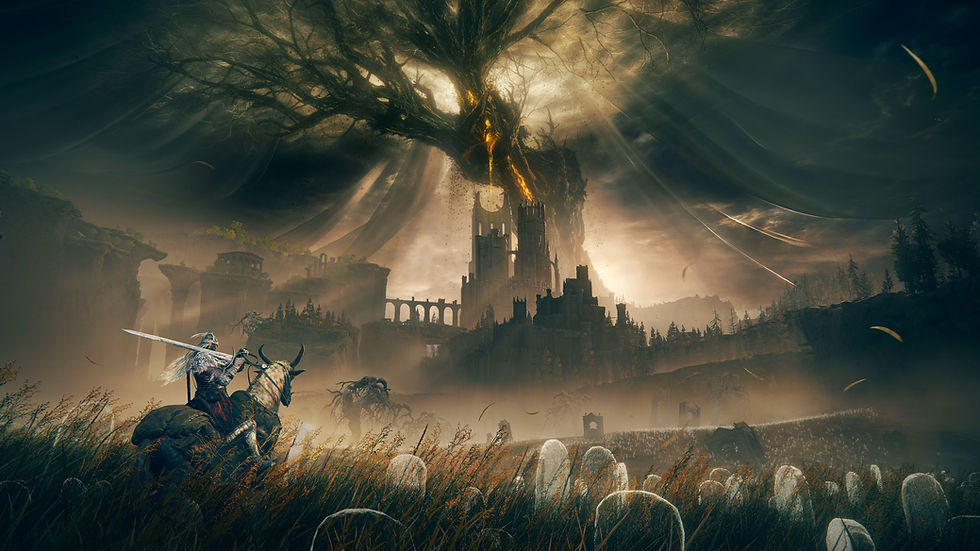
The expansion released to rave reviews, receiving a slew of perfect (or near-perfect) scores, citing the game as one of the best releases of the year. Among this deafening applause, some critics pointed towards frustrating systems, unnecessary difficulty, and misleading hitboxes as glaring flaws in an otherwise beautifully made addition. Standing in opposition to this is a legion of staunch defenders who disregard these difficulty-related complaints, instead attributing these criticisms to a lack of skill from the reviewer themselves. Whether these defenders truly believe these claims or simply enjoy the high level of challenge, it seems a sizable portion of this clique refuses to hear about any experience that differs from their own. The absurd polarization of this argument is evident in any thread discussing the games reviews or its difficulty, where discussions inevitably lead to entrenched extremes preaching to deaf ears. Unfortunately, this makes many critical observations of the game impossible to make, as thoughtful analysis focusing on the nuances of the game’s various successes and shortcomings is drowned out by endless arguing.
The State of Games Discourse

This issue spans a far wider scope and covers far more topics than the difficulty or accessibility seen in this case. These argumentative and dismissive discussions are becoming all too common, with many of the major stories and releases of recent years being attached to misguided and distracting controversy. While each controversy typically focusses on a different subject, they are often centered around vilifying a specific figure, whether that be a writer, journalistic organization, developer, or publishing company. Once a specific figure has been targeted, the content of the argument begins to deteriorate as it becomes less about criticizing and more about spreading hate. So, while each of these controversies may seem specific, isolated, or distinct, they all reflect the similarly tumultuous state of the entire industry.
Industry Pressures

The gaming landscape is possibly more volatile than ever, plagued by an obsession with profits and a disregard for labour as a seemingly endless stream of layoffs impact developers and journalists alike. Meanwhile, some of the largest companies have built cultures precariously supported by oversized and bloated releases, while perpetuating unhealthy and unsustainable crunch practices. But this toxicity extends to consumer culture as well. Although gaming has become a far more tolerable space in recent years (especially in comparison to the days of the blatant misogyny of a “movement” like Gamergate), the general refusal to acknowledge any depth or subjectivity in the medium results in a startling rise in consumerist, reductionist, reactionary, and anti-journalistic mentalities.

The focus of the conversations that surround the major releases of recent years demonstrates just this. The Last of Us Part II was met with backlash for its character and thematic choices, as players disregarded these choices by classifying them as “bad writing” instead of engaging with the narrative itself. Baldur’s Gate 3 received overwhelming praise for its staggering size and narrative complexity, filling players with slightly misguided optimism for future games matching this scale. This mirrors the recent increase in sentiments stating the worth of a game should be dependent on its length rather than experiential qualities. 2023’s other “Game of the Year” nominees, all continuations of existing properties, represent the worrying trend of an increasing reliance on existing IPs through remakes, remasters, and sequels.

Often some of the most profitable opportunities for publishers, these releases divert attention to their alluring nostalgia and away from more critical observations. Each of these examples illustrates concerns regarding the professional and public sides of games, with misfocused arguments taking away from the works themselves. But while this is far from the largest issue that gaming culture is currently facing, the way we talk about games and the focus of these discussions needs improvement. Although the responsibility for this improvement lies largely with players, certain games have already illustrated how developers can facilitate this advancement themselves. Smaller and independent studios do this especially well, with a perfect example being found in Strange Scaffold’s recent release, Clickolding.
Indie Innovation

Clickolding is a short, strange, and disturbing game about clicking a counter as a masked figure watches you do so. As you click, and the counter ticks closer and closer to your goal of 10,000, the masked figure will ask you to click in certain ways and offer occasional insights into why both you are there. The gameplay here is intentionally simple and incremental, allowing the narrative to take the spotlight as the simple act of clicking deepens immersion and ensures pacing is directly tied to player action. This simple gameplay, along with its short length and low price, makes this an easily accessible and unmissable experience. Yet it’s the narrative itself, or rather what’s missing from the narrative, that makes this such a compelling game. The game never offers a direct explanation, nor any backstory, or even a definitive ending; instead providing just enough of a conclusion to satisfy players while allowing the true meaning of the game to remain ambiguous.

This narrative obscurity means analysis is open-ended and flexible. Depending on your interpretation, the game could be about religion, sex-work, interactivity, viewership, the dynamic between developer and player, a mix of any of these, or something else entirely. Without feeling confusing, each part of the game is imbued with obscurity and subjectivity which seems to encourage intelligent discussion rather than offer the type of discardable experience found in many games. Clickolding manages to avoid many of the problematic elements of current game culture highlighted above. Restricted scope benefits developer and player alike, as developers avoid the crunch and risk associated with large projects while the game’s short duration and low cost provides a far more accessible experience than a more time-consuming or more expensive epic. As an original property it evades preexisting expectations and allows the game’s content to speak for itself. And without shying away from complex themes or sensitive subject matter, the game fosters a more open-ended and critical dialogue while avoiding the distracting controversy that arises with many larger releases.
Looking Forward
Despite all of its successes, games like Clickolding still don’t present a complete solution for the games industry, nor should it replace AAA projects entirely. The Last of Us Part II, Elden Ring, and Baldur’s Gate 3 are all spectacular games that reflect a high level of passion and care from the teams behind them. Unfortunately, the large presence of these games seems to act as a magnet for backlash and controversy due to a portion of their audience who are less interested in critical games or discussions. But the presence of games like Clickolding indicates a promising possibility, where the value of a game doesn’t come from its scale, fidelity, or popularity. With its value instead depending on the richness of the work itself and the discussions it entails, where it’s the responsibility of both developer and player to determine a game’s cultural quality.


Comments